
If you’re wondering about the difference between CB radios and 10-meter radios, then this post is for you.
First and foremost, 10-meter radios are more powerful than CB’s. They offer a longer transmission range, and they also have a higher power output. CB’s can transmit up to 1-3 miles, but a 10-meter radio can reach up to thousands of miles, literally into the next country. But they do require a
license to operate them, and CB radios do not.
In this post….
Licensing
Range
Power
Modulation
Use
Antennas
Comparison Chart
Licensing
The Federal Communications Commission manages all licensing for the US. There are rules and regulations which can be found in the post, FCC Rules and Regs at a Glance.
But just a few notes:
CB operators do have to meet FCC guidelines, but do not need licensing. This means that their radios must be FCC certified by the manufacturer, and owners may not increase the power output or attach a power amplifier or modify the unit internally. This also means that CB operators do
not get to build or modify their equipment.
10-meter radio operators on the other hand, may modify and even build their own equipment. An owner must pass a test before receiving his license. There are three levels of tests depending on bandwidth used and distance of transmission.
Range
CB’s have a range of roughly three miles in optimal conditions. (The FCC limits transmission to no more than 155.3 miles.)
This is in comparison to 10-meter radios that can transmit across the world under
optimal conditions. 10-meter radios also can include such bands as morse code, AM/FM, worldwide repeaters, SSB, high-frequency beacons, and DX stations.
CB’s have all regular 40 channels on the 11-meter band (26.965 MHz to 27.405 MHz), while 10-meter radios operate on the 10-meter band (28.000 MHz to 29.700).
Power
Limited to an output of 4 watts RMS on AM/FM and 12 watts PEP on SSB, CB’s don’t have the muscle that you will find on a 10-meter radio, operating at about 50 watts PEP. Some 10-meter radios even offer up to 650 watts PEP. It is this power (especially SSB) that aids in clearer transmission, making the 10-meter radios a really good option for crisp audio over long distances.
Modulation
CB’s are more limited in their channels and only use AM, FM and SSB modulation.
10-meter radios on the other hand have more options for modulation such as AM, FM, SSB, CW, RTTY, PSK31 digital and ATV.
Use
CB’s are a favorite of truckers, hobbyists, and businesses. Easy to understand and use, they are perfect for local transmission.
10-meter radios are primarily used by the more serious amateur radio operators for emergency communications and long distance transmission, as well as hobbyists.
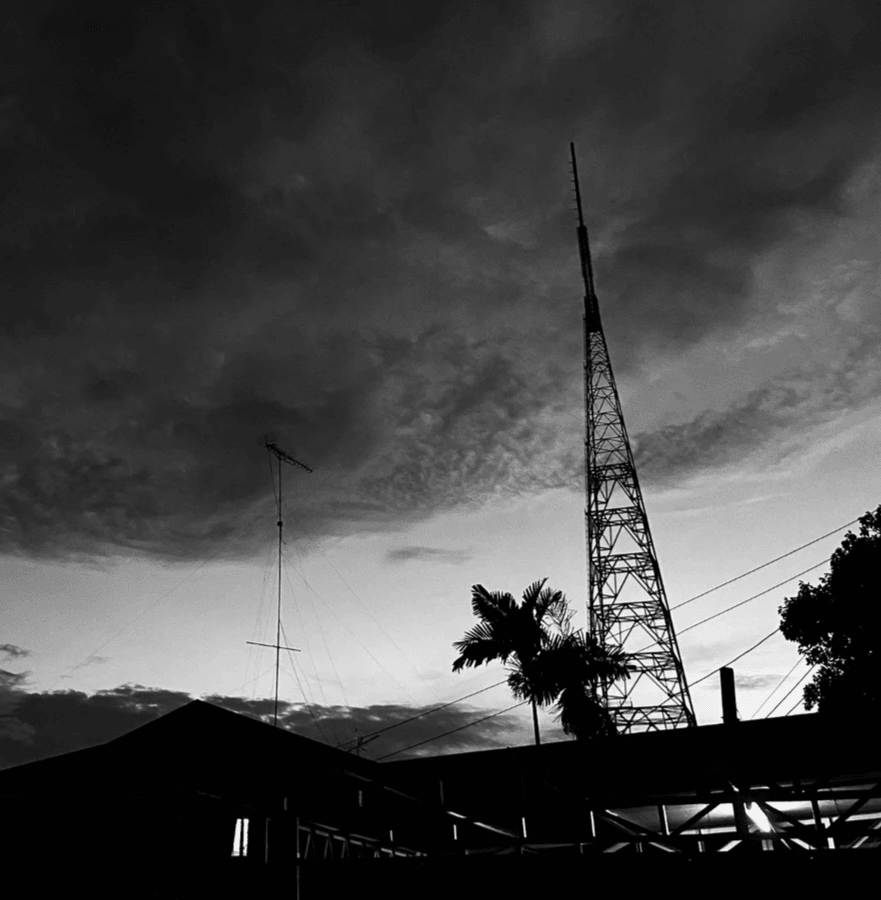
No radio system is going to work without an antenna, and these must also be fitted to the frequency on which your radio operates.
CB’s require antennas a few inches longer than a 10-meter to catch the radio waves and these must be tuned with a SWR meter. In fact, if your antenna is not properly tuned and fitted for your CB, it can damage your radio.
As a general rule, 10-meter radios actually require antennas smaller in length than required by CB’s because the larger radios are able to receive the full spectrum of VHF, UHF, and SSB sidebands.
However, the antennas are usually compatible with both radios because all antennas are meant to be adjustable either by cutting or raising them.
Comparison Chart
Here is a quick snapshot to give you an idea of the differences between the two radios.
LICENSE
CB RADIOS -- No license required
10-METER RADIOS -- FCC License required
RANGE
CB RADIOS -- 1-3 miles average
10-METER RADIOS -- Up to around the world
POWER
CB RADIOS -- Roughly 4 watts RMS and 12 watts PEP
10-METER RADIOS -- Up to 650 watts PEP
MODULATION
CB RADIOS -- AM, FM and SSB
10-METER RADIOS -- AM, FM, SSB, CW, RTTY, PSK31 digital and ATV
USE
CB RADIOS -- Local communications and emergencies
10-METER RADIOS -- Global communications and emergencies
ANTENNA
CB RADIOS -- Usually slightly longer
10-METER RADIOS -- Usually slightly shorter
